Which Glass Has More Water? What Your Choice Might Say About You
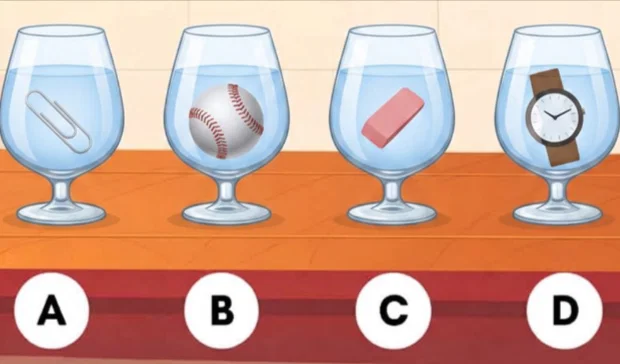
At first glance, this simple visual puzzle seems easy: four identical glasses labeled A, B, C, and D are each filled with water—but each also contains a different object. Your task? Decide which glass actually contains more water. But here’s the twist: beyond logic, this type of question often sparks curiosity about personality, perception, and how we interpret what we see.
Let’s break it all down.
Understanding the Puzzle
Each glass appears to be filled to roughly the same level. However, the objects inside differ:
Glass A contains a paperclip
Glass B holds a baseball
Glass C holds an eraser
Glass D holds a wristwatch
At first, you might be tempted to choose based on which appears fuller. But the key detail here is displacement—the space each object occupies within the glass.
The Scientific Answer
The correct answer is Glass A.
Why? Because the paperclip is the smallest object and displaces the least water, this means more real water can fit into the glass than the other objects. Larger objects like the baseball (Glass B) take up much more space, leaving less room for water—even if the water levels appear similar. So, while all the glasses appear equally full, Glass A actually contains more water.
Which Glass Has More Water? What Your Choice Might Say About You
At first glance, this simple visual puzzle seems easy: four identical glasses labeled A, B, C, and D are each filled with water—but each also contains a different object. Your task? Decide which glass actually contains more water. But here’s the twist: beyond logic, this type of question often sparks curiosity about personality, perception, and how we interpret what we see.
Let’s break it all down.
Understanding the Puzzle
Each glass appears to be filled to roughly the same level. However, the objects inside differ:
Glass A contains a paperclip
Glass B holds a baseball
Glass C holds an eraser
Glass D holds a wristwatch
At first, you might be tempted to choose based on which appears fuller. But the key detail here is displacement—the space each object occupies within the glass.
The Scientific Answer
The correct answer is Glass A.
Why? Because the paperclip is the smallest object and displaces the least water, this means more real water can fit into the glass than the other objects. Larger objects like the baseball (Glass B) take up much more space, leaving less room for water—even if the water levels appear similar. So, while all the glasses appear equally full, Glass A actually contains more water.