Visual Processing Skills
Differences in how the brain processes visual information can influence puzzle-solving performance.
This doesn’t mean one person is smarter than another.
It simply reflects different cognitive strengths.
Common Mistakes Puzzle Solvers Make
Many participants struggle because of predictable mistakes.
Looking Too Quickly
The brain often assumes it has seen everything after a brief glance.
In reality, important details may remain unnoticed.
Searching for Perfect Examples
Hidden objects are rarely displayed clearly.
A flower may not look exactly like a typical flower.
An apple may only be partially visible.
Flexibility is essential.
Ignoring the Background
Many hidden objects are concealed within background elements rather than obvious foreground locations.
Becoming Frustrated
Frustration narrows attention and reduces effectiveness.
Staying relaxed often improves performance.
The Psychology of Visual Camouflage
Visual camouflage is one of the most fascinating aspects of observation puzzles.
Camouflage works by exploiting how the brain organizes information.
When an object shares characteristics with its surroundings, the brain groups them together.
As a result, the hidden object becomes difficult to distinguish from the background.
Animals use this strategy in nature.
Puzzle creators use the same principle in illustrations.
Whether hiding an egg among stones or a flower among leaves, the goal remains the same:
Make the object visible without making it obvious.
Turning Observation Puzzles Into Family Fun
One reason hidden object challenges remain popular is their versatility.
They can be enjoyed alone or with others.
Families often transform puzzles into friendly competitions by:
Setting time limits.
Comparing results.
Working together as teams.
Creating custom challenges.
Children especially enjoy searching for recognizable objects such as apples, flowers, eggs, and pens.
These activities combine entertainment with learning.
Observation Skills in Everyday Life
The abilities developed through puzzles extend beyond games.
Observation plays an important role in daily activities such as:
Driving safely.
Reading body language.
Detecting errors.
Finding misplaced items.
Following instructions.
Solving practical problems.
Strengthening observation skills can improve performance in both personal and professional settings.
Many careers rely heavily on attention to detail, including:
Medicine
Engineering
Design
Investigation
Quality control
Education
While hidden object puzzles won’t instantly transform someone into an expert observer, they can help sharpen useful cognitive abilities.
The Satisfaction of Finding the Final Object
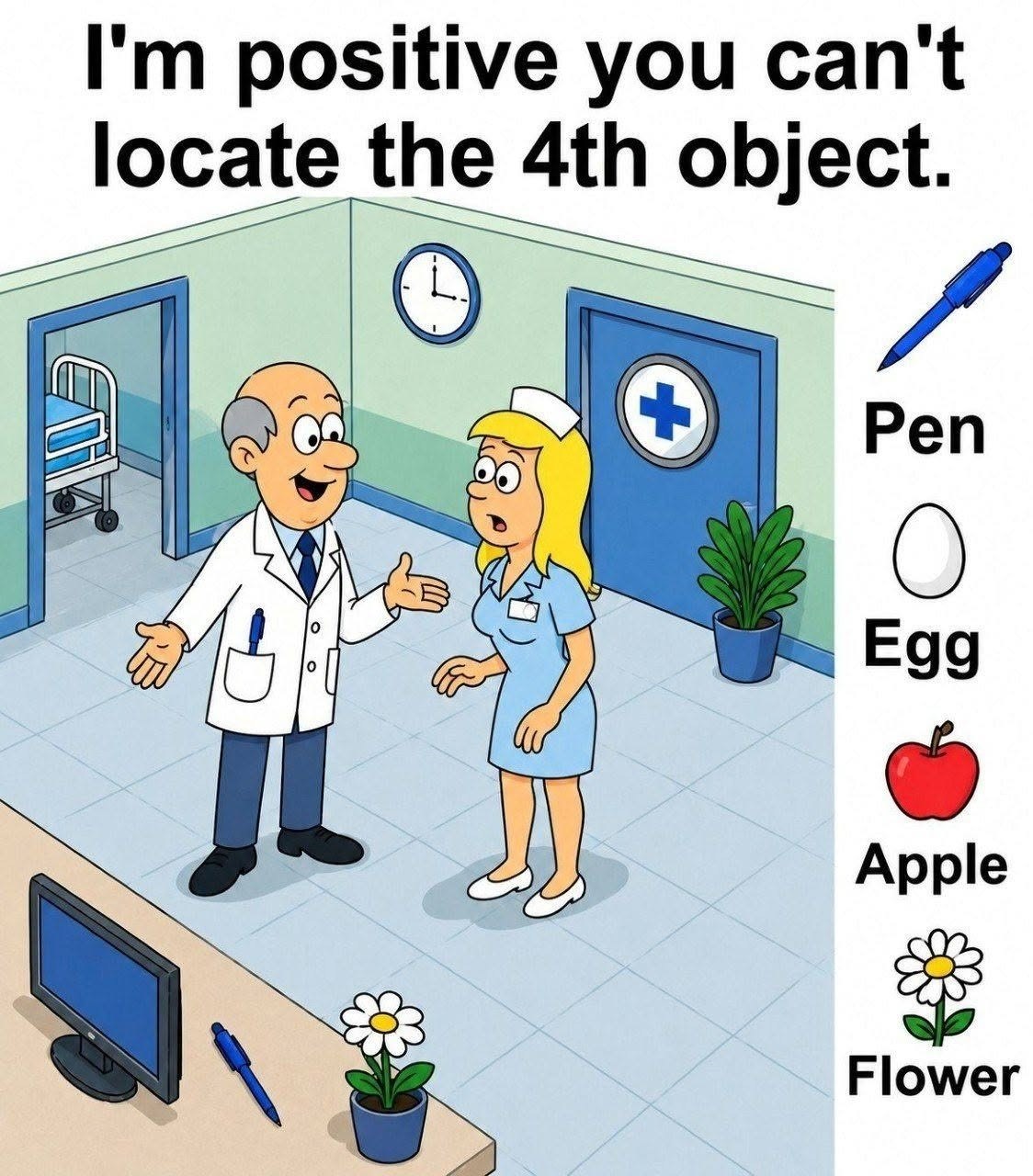
One of the best moments in any observation puzzle occurs when the final hidden object is discovered.
Perhaps you’ve already found:
The pen
The egg
The apple
But the flower remains elusive.