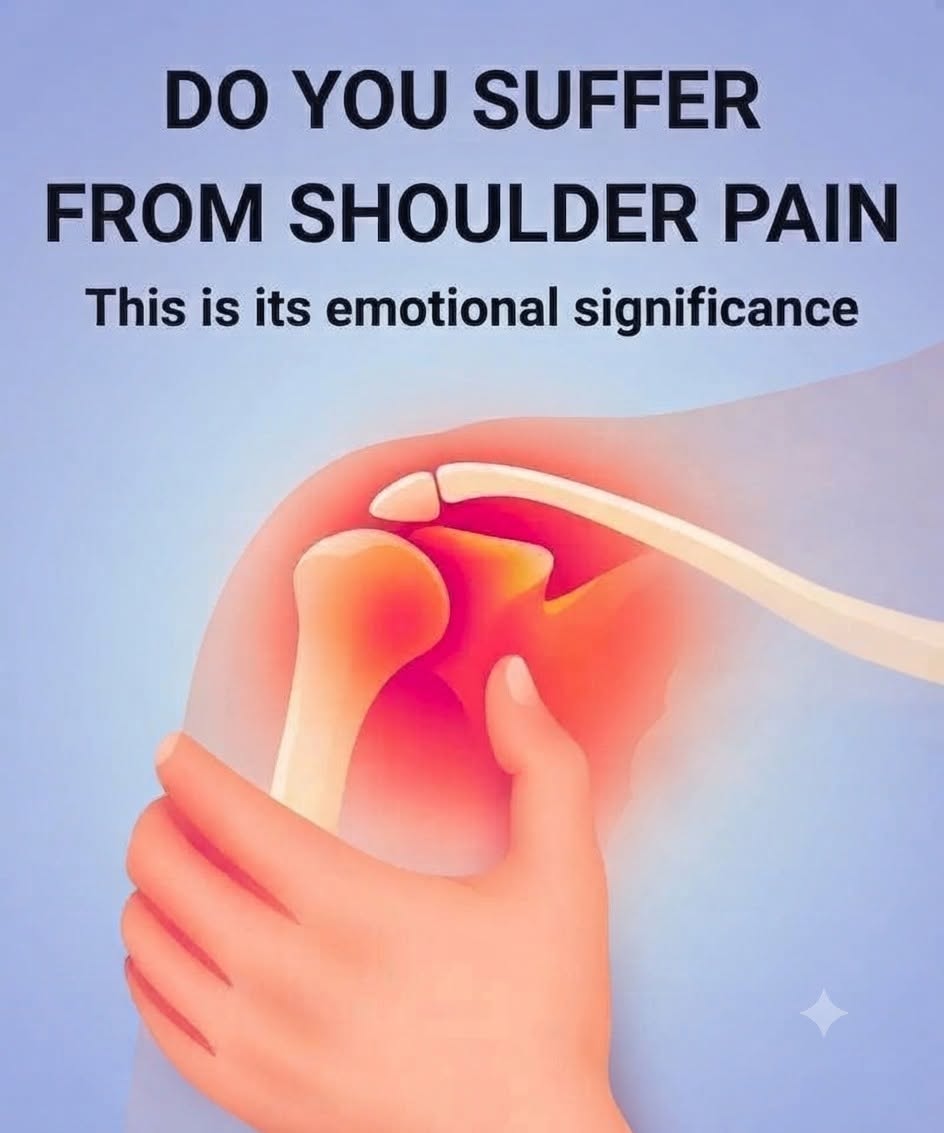
exhaustion, poor sleep, and prolonged tension can all affect muscle activity, pain sensitivity, posture, and recovery. This doesn’t mean that shoulder pain is secretly caused by a particular emotion, or that every ache has a hidden psychological meaning.
Instead, the connection between the mind and body is more complicated — and more interesting.
Your shoulders may become tense when you’re stressed. You may unconsciously raise them when you’re anxious. You may clench your muscles during difficult moments without realizing it. Over time, that repeated tension can contribute to discomfort.
So if