A charger that becomes extremely hot, repeatedly overheats, or shows other unusual behavior deserves investigation.
Where you place the charger also matters.
Electrical adapters shouldn’t be covered by clothing, blankets, pillows, or other materials that could interfere with heat dissipation.
They should not be exposed to water.
They shouldn’t be placed where they can be crushed, bent, or damaged.
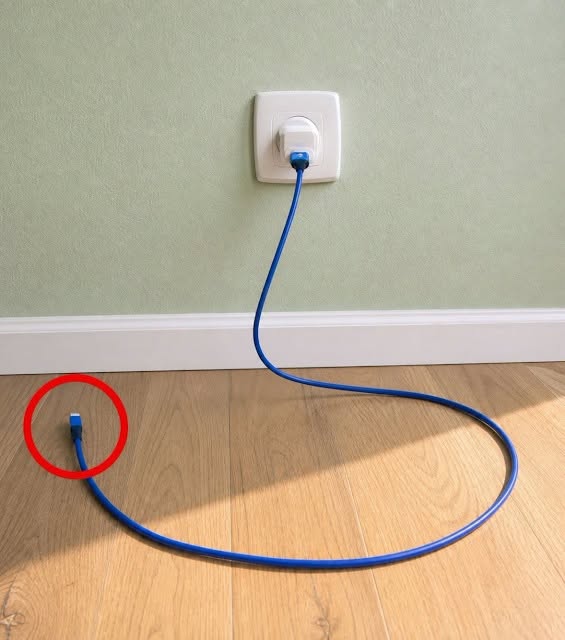
And they shouldn’t be treated like permanent decorations on the floor where people can step on them or pull them from the outlet.
This is especially important around children and pets.
A loose charging cable can become a tripping hazard.
A small adapter can be pulled from a wall.
A damaged cable can become dangerous if it is repeatedly bent or chewed.
So even though an unused charger is generally not an immediate hazard simply because it remains plugged in, the environment around it can create additional risks.
The Viral Warning Gets One Thing Right—and One Thing Wrong
The dramatic warnings circulating online often say something like:
“Never leave your charger plugged in without your phone!”
Then comes a list of terrifying possibilities.
Fire.
Explosion.
Massive electricity bills.
Electrical shocks.
A ruined home.
The problem is that these warnings often mix legitimate safety advice with exaggerated claims.
That makes it difficult for people to understand what they actually need to worry about.
The reality is more balanced.
A properly manufactured charger in good condition is designed to be connected to an electrical outlet.
When it isn’t connected to a phone, it generally enters a very low-power state.
It doesn’t continue pumping the same amount of electricity into an imaginary phone.
It doesn’t normally become dangerously hot simply because nothing is connected.
And it doesn’t automatically start a fire because you forgot to unplug it.
However, electrical faults can happen.
That’s why inspecting chargers and replacing damaged equipment is important.
The goal shouldn’t be fear.
The goal should be awareness.
What About Overnight Charging?
Another common concern involves charging phones overnight.
Modern smartphones and chargers contain systems designed to regulate charging.
When a phone reaches a high state of charge, the device doesn’t simply continue receiving maximum charging power indefinitely.
Charging behavior is managed electronically.
That said, manufacturers still recommend using appropriate chargers and cables and keeping charging equipment in good condition.
The environment matters too.
Charging a phone under a pillow or buried beneath blankets is a bad idea because heat can become trapped.