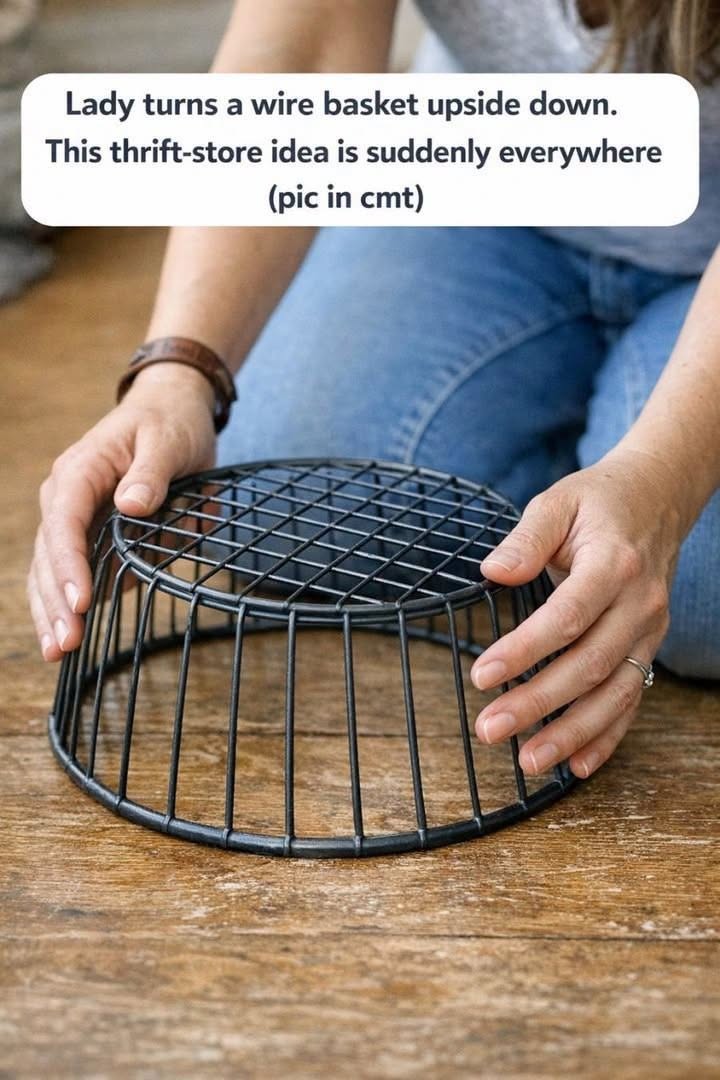
If it feels unstable when empty, it is unlikely to make a dependable side-table base.
Choose the Right Tabletop
The tabletop should extend slightly beyond the edge of the basket for a finished furniture-like appearance.
For example, if the basket measures about 18 inches across, a tabletop around 20 inches in diameter can provide a comfortable overhang.
Do not make the tabletop excessively larger than the basket, because too much overhang can make the table easier to tip.
Wood, Glass, or Acrylic?
Wood is usually the easiest material for a beginner because it can be sanded, stained, painted, or sealed.
Acrylic creates a lighter contemporary appearance and can work well when properly supported.
Glass can look elegant, but it should be furniture-grade tempered glass with smooth finished edges. Improvised pieces of ordinary window glass should not be used as tabletops because they can break dangerously.
Once you have chosen a sturdy basket and correctly sized top, a little preparation can make the difference between a quick craft project and a side table that actually looks polished.
Step 1: Clean the Wire Basket
Before painting or attaching anything, clean the basket thoroughly.
Wipe away dust, grease, stickers, and other residue with a damp cloth and an appropriate mild cleaner.
Allow the metal to dry completely.
Paint and adhesive generally bond better to clean, dry surfaces than to dusty or oily metal.
Step 2: Inspect the Basket
Check for sharp wires, loose welds, rust, or bent sections.
Do not use a basket with broken structural joints unless it can be repaired safely.
If there are minor rough areas, smooth them carefully before continuing.
Step 3: Paint the Basket if Desired
If you want to change the color, place the basket in a well-ventilated outdoor or designated painting area.
Protect the surrounding floor or ground with cardboard or a drop cloth.
Apply spray paint in several light coats rather than one thick coat. Rotate the basket as needed so you can reach the wires from different angles.
Allow each coat to dry according to the paint manufacturer’s directions.
For bare metal, a primer designed for metal may help improve adhesion and durability.
Step 4: Prepare a Wooden Tabletop
If you are using unfinished wood, lightly sand the top, bottom, and especially the edges.
Begin with medium-grit sandpaper if the surface is rough, then finish with a finer grit for a smoother feel.
Remove all sanding dust before painting, staining, or sealing.