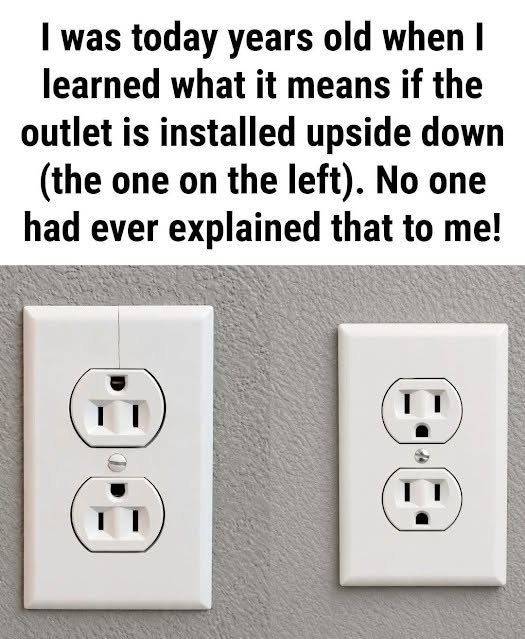
Myth 3: It’s Installed Incorrectly
Not necessarily.
In many cases, the electrician intentionally installed it that way.
Why Many Homes Still Use Ground Down
Tradition plays a major role.
For decades, homeowners have become accustomed to seeing outlets with the grounding hole at the bottom.
Many people simply prefer the appearance.
Furniture, power strips, and certain plug designs may also seem more familiar in this orientation.
Because there is usually no functional difference for everyday use, many builders continue following this long-established convention.
Does Orientation Affect Safety?
Research has not established one orientation as universally safer in every situation.
Instead, overall electrical safety depends much more on factors such as:
Proper installation
Correct wiring
Secure grounding
Use of GFCI outlets where required
AFCI protection where required
Regular inspection of damaged outlets
A correctly wired outlet—whether ground up or ground down—is generally far safer than a damaged or improperly installed outlet.
Other Outlet Features Worth Knowing
Modern electrical systems include several safety improvements that many homeowners overlook.
GFCI Outlets
Ground Fault Circuit Interrupter (GFCI) outlets are commonly installed in bathrooms, kitchens, garages, laundry rooms, basements, and outdoor locations.
These outlets quickly shut off power if they detect electricity flowing where it shouldn’t, helping reduce the risk of electric shock.
They are easily recognized by the TEST and RESET buttons on the front.
Tamper-Resistant Outlets
Many newer homes use tamper-resistant receptacles.
These contain internal shutters that help prevent children from inserting objects into the slots.
Weather-Resistant Outlets
Outdoor outlets are often specially designed to withstand moisture and changing weather conditions.
Should You Turn Your Outlets Upside Down?
For most homeowners, there’s usually no practical reason to rotate existing outlets simply because of internet advice.
Changing outlet orientation requires removing the faceplate and potentially working near electrical wiring.
Unless you’re qualified to perform electrical work safely, it’s best left to a licensed electrician.
If you are already renovating or replacing outlets, you can discuss your preferred orientation with your electrician.
Electrical Safety Tips for Every Home
Regardless of outlet orientation, consider these basic safety practices:
Replace cracked or damaged outlets promptly.
Never overload power strips or extension cords.
Keep electrical devices away from water.
Test GFCI outlets regularly using the TEST and RESET buttons.