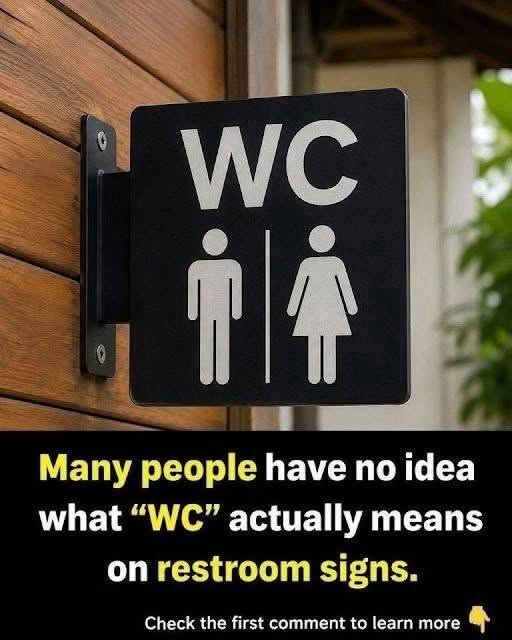
Why Did Flush Toilets Need a Special Name?
To understand why “water closet” became such an important expression, it helps to remember how different domestic life was before modern sanitation.
For centuries, many people did not have anything resembling the bathrooms found in contemporary houses.
In rural areas, toilets were commonly located outside the main building.
In cities, sanitation could be even more complicated. Dense populations, limited sewage systems, contaminated water, and poor waste disposal contributed to serious public-health problems.
The development of modern plumbing gradually changed these conditions.
Water could be brought into buildings through pipes.
Waste could be carried away through drainage systems.
And toilets could become permanent fixtures inside homes and public buildings.
This was not merely a matter of convenience.
It represented a major transformation in hygiene and urban infrastructure.
The ability to remove human waste quickly and safely from living areas was an important part of the development of modern sanitation.Style Home Decor
The water closet was one piece of that transformation.
The Rise of Indoor Plumbing
During the 18th and especially the 19th centuries, improvements in plumbing technology gradually made indoor sanitation more practical.
Flush toilets existed in various forms before modern systems became common. One famous early example is associated with Sir John Harington, who described a flushing toilet in England in the late 16th century.
But an invention does not become revolutionary simply because someone creates it.
It also needs the infrastructure to support it.A flush toilet requires water.
It also requires somewhere for wastewater to go.
As cities developed more extensive water and sewer systems, the practical possibilities changed dramatically.
By the 19th century, water closets were increasingly appearing in wealthy homes, hotels, institutions, and public buildings.
At first, they could be expensive and technically complicated.
But as plumbing technology improved and sanitation systems expanded, the idea of having a toilet inside a building became increasingly normal.
Eventually, the water closet stopped being a novelty and became a standard feature of modern life.Toilets
The terminology, however, had already taken root.
Why “WC” Survived
You might expect an old expression like “water closet” to disappear completely.
In everyday English, it largely did.
Most English speakers today are much more likely to say “bathroom,” “restroom,” or simply “toilet.”
Yet the abbreviation WC remains surprisingly common.
One reason is its international usefulness.
A sign reading “Bathroom” may not be immediately understood by someone who does not speak English.