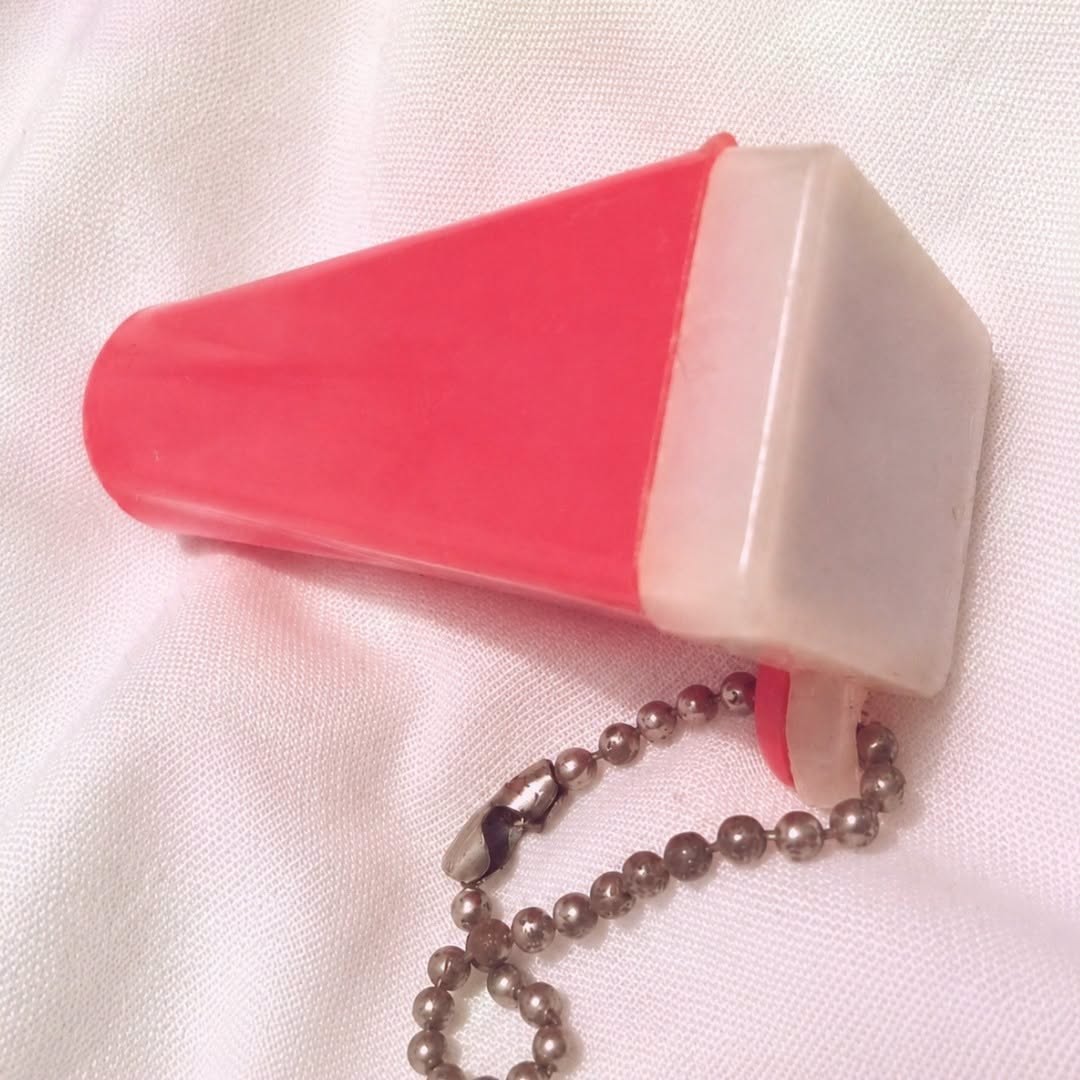
The object in the photo is commonly known as a keychain photo viewer, sometimes also called a miniature slide viewer, souvenir photo viewer, or picture keychain viewer. At first glance, it looks like a small plastic toy or an odd keychain charm, but for many Americans who grew up in the 1960s, 1970s, and 1980s, this little item brings back instant nostalgia.
A keychain photo viewer was a small plastic viewer attached to a metal ball chain. Inside the plastic body, there was usually a tiny transparent photo, slide, or image. To use it, a person would hold the viewer up toward a bright light, look through the small viewing end, and see a miniature picture appear inside.
These viewers were often shaped like small tubes, boxes, binoculars, cameras, or simple plastic cases. The one shown in the image has a pink plastic body, a light-colored viewing end, and a small metal chain, making it easy to carry on keys, bags, or purses.
When Did It Become Popular?
The idea of tiny image viewers goes back much further, but the plastic keychain photo viewer became especially popular in the United States during the mid-20th century, particularly from the 1960s through the 1980s.
During that time, these items were often sold or given away as souvenirs, promotional gifts, novelty toys, and keepsakes. Tourist attractions, amusement parks, fairs, churches, schools, and businesses sometimes used them to show a tiny photo of a place, logo, religious image, family picture, cartoon, or scenic view.
For many people, receiving one felt special because it was like carrying a secret little picture in your pocket.
What Was It Used For?
The main purpose of a keychain photo viewer was simple: to let someone view a tiny picture through a small lens or opening.
People used them as:
Souvenirs from vacations
Many were sold at tourist spots and contained images of landmarks, beaches, mountains, amusement parks, or famous buildings.
Personal keepsakes
Some viewers held tiny family photos or portraits, making them a sentimental item before digital phones existed.
Promotional giveaways
Companies sometimes used them as advertising items, placing a logo, product image, or business message inside.
Novelty toys for children
Kids enjoyed looking through them because the tiny hidden image felt fun and mysterious.
Religious or inspirational items
Some versions contained images of saints, churches, prayers, or spiritual scenes.
Before smartphones and digital photo galleries, small objects like this had a unique charm. They turned a single photo into something portable, personal, and interactive.